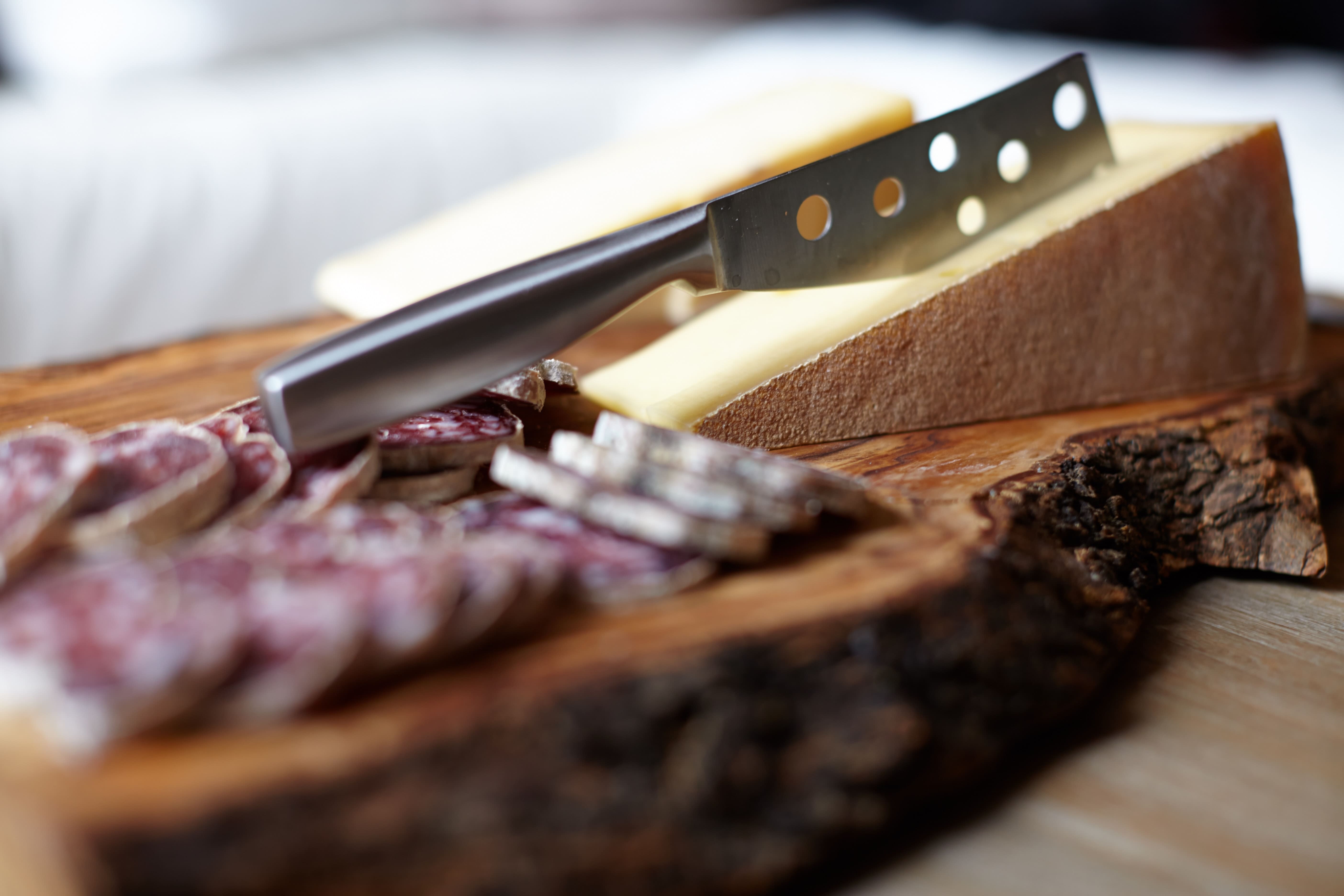

The aging of cold cuts and cheeses is a very important phase, which allows the product to acquire its distinctive organoleptic characteristics. Originally, this method of conservation served to preserve meat and milk for longer, which would otherwise have to be consumed fresh, but, thanks to the ageing process, it also allows the taste to be improved and enriched, developing scents and flavours that were not present at start. Today, the seasoning of cold cuts and cheeses is not a matter of chance, but rather of precise planning and special temperature and humidity conditions.
Aging stages in cold cuts
There are four phases in the aging of cold cuts: stewing, drying, ageing and brushing. Stewing eliminates the first excess of water, keeping the product at a temperature between 18 and 26 degrees for a period of up to 4 days depending on the size of the sausage. Drying is then carried out to allow the remaining water to evaporate. The water loss must be uniform throughout the mixture in order to prevent the sausage from hardening and breaking. The temperature and humidity must then be carefully regulated and monitored to prevent the cold cut from drying out too quickly and dehydrating. This process lasts 7 to 10 days and takes place at a lower temperature, 18 to 20 degrees, and with proper aeration. Ageing is the decisive moment during which the mixture begins to develop its aroma and the product acquires the organoleptic characteristics that will distinguish it. Finally, brushing serves to remove excess mould.
Aging stages in cheeses
During aging, the actual transformation of the curd into cheese takes place and those biochemical processes that determine the texture, taste and smell of the final product occur. From the very first stages of ageing, the action of certain bacteria leads to the conversion of lactose into lactic acid and volatile compounds are formed, which are responsible for the aroma of the cheese, along with carbon dioxide, which produces the holes typical of some varieties. Over time, the texture is also enriched with substances that make the aroma more intense and broader. The cheese dehydrates, concentrates and becomes harder over time, with a faster process on the surface where the rind forms. With prolonged ageing, the fats are also transformed by the moulds and enzymes in the rennet into fatty acids that give the characteristic savoury and piquant notes.
The Ilsa Aging cabinet
We have seen how correct aging of cold cuts and cheeses needs accurate temperature and humidity control at the different stages. It is thanks to the precise management of these parameters that the chemical-physical transformation processes and the bacteria useful for developing the characteristic aromas are activated.
Ilsa has developed the aging cabinets of the Evolve line to make the seasoning of products easier and more efficient at any time of the year, unaffected by the natural influences of weather conditions and seasonal cycles. Ilsa’s Evolve seasoning cabinets are made of stainless steel AISI 304, which is food-compatible, and insulated with 75 mm insulation with high-density polyurethane foam to ensure low dispersion and reduce energy consumption.
The internal air flow is indirect and homogeneous to achieve uniform drying on all shelves, unlike vertical ventilation systems that lead to over-drying of food placed at the top, leaving those at the bottom moister. Electronic temperature and humidity management allows the ideal conditions for quality seasoning to be reproduced.
Meet the Evolve aging cabinet, also available in a glass door version.