



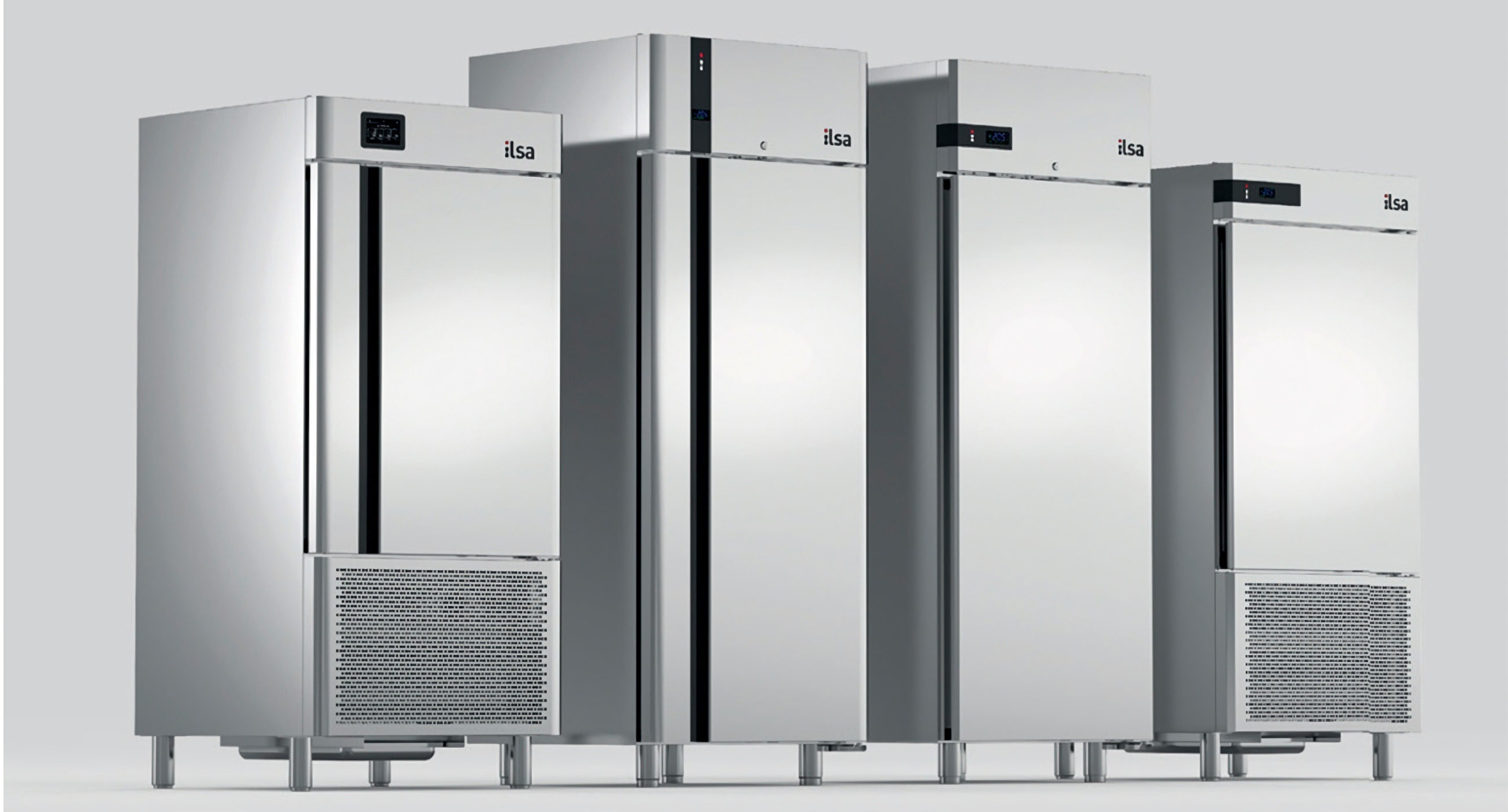
Learn a few useful tips on how to reduce electricity costs related to the refrigerated cabinets you use in your restaurant, pizzeria or bakery. ILSA products are designed to help you be more sustainable and reduce consumption thanks to an advanced energy-saving system.
When working in a restaurant on a daily basis, the technologies used are crucial to maintaining food quality. The recent increase in energy costs has made every single refrigeration element of a restaurant, pastry shop or bar important to the economic balance of the business. But how to save energy without losing product quality?
In this short guide, we give you 7 tips to reduce refrigerating cabinet consumption.
1. Ventilation slits must be kept clear
Ventilation slits must not be covered by foodstuffs, food price tags or dirty. All paper and labels must be removed from the grids. Obstructed slits do not allow hot air to be properly discharged to the outside and impair the efficiency of the heat exchange necessary for cooling the cabinet.
2. Respect the maximum storage height
Food inside refrigerated cabinets should be arranged evenly, respecting the maximum storage height. It is best not to place an excessive amount of products inside the cabinet and not to completely obstruct the available space. If the staff, in their haste, overload the cabinet, rather than bringing the goods back into storage, a disturbance of the cold balance occurs. The excess food creates an obstacle to air circulation. The efficiency no longer corresponds to the theoretical efficiency of the appliance. As a result, the quality of stored products and operating costs suffer.
3. Do not introduce hot food
Let hot food cool down to room temperature before storing it in the refrigerated cabinets. Heat confuses the refrigerator’s temperature control system, increasing energy consumption. Introducing hot food causes condensation and a rapid rise in the internal temperature, which forces the appliance to work with more power to restore the set values.
4. Program the temperature correctly
Adjust the temperature according to what is most suitable for storing the food you have placed in the refrigerated cabinet. Always be careful not to use lower temperatures than necessary. Each food has its own perishable characteristics and specific storage methods.
Temperatures that are too low can spoil the organoleptic qualities of the most delicate foods, producing a kind of ‘frost’ effect. They also lead to increased energy consumption and operating costs.
5. Place the refrigerated cabinet away from heat sources
It is important to protect the refrigerated cabinet from direct sunlight. The best site for placing refrigeration equipment is in the shade, in a place free of draughts and ventilation systems. This prevents the refrigerator from overheating or hot air from escaping back into it or other refrigerators in the vicinity. If several refrigerated cabinets are in use in the same room, they must be positioned so that the hot air coming out of one does not blow onto the other.
6. Do not postpone maintenance
If the refrigeration cabinet is not working properly, carry out maintenance immediately or call for service. Small faults still allow the appliance to be operational but reduce its performance or increase leakage, driving up consumption. Some examples of faults that can be found over time are:
- faulty door seals;
- imperfect door closures;
- icing;
- unusual or loud noises from the fan.
7.Choose more efficient refrigerated cabinets
The quest for greater sustainability starts with the choice of equipment for the restaurant, pizzeria and pastry shop. ILSA refrigerated cabinets are equipped with the IESS (ILSA Energy Saving System), which ensures real energy savings. The products are characterised by the high efficiency of the refrigeration units in climate class 5 (tropicalized), built with an insulation thickness of 85 mm for the body and 65 mm for the door. They are equipped with high-efficiency, environmentally friendly refrigerant gases and an automatic defrost function. Intelligent electronic control makes it possible to optimise energy consumption to the maximum, while also reducing the system’s operating costs.
ILSA refrigerated cabinets are available in a wide variety of models in terms of size, number of doors and pan capacity. Discover the refrigeration line on our website or contact us for advice.


